
Regular and Substantive Interaction (RSI) Recommendations for Faculty
Regular and Substantive Interaction (RSI) is a federal requirement for distance education, ensuring online courses include frequent, instructor-initiated, and academically focused engagement to distinguish them from correspondence courses. RSI combines scheduled interaction ("regular") with academic engagement ("substantive"), such as instructor-led discussions, feedback on work, and direct instruction, ensuring quality and eligibility for federal financial aid.
As part of the TLC’s efforts to ensure Clarkson online courses meet the RSI requirements for accreditation, we audited upcoming 2026 summer online courses. Using recommended best practices for RSI and Quality Matters Standards, evaluations were made using this RSI rubric. Criteria are broken into three categories: instructor-to-student, student-to-student, and student-to-content interactions. Each line item is worth 1, 2, or 3 points. To reach RSI expectations, courses must score at least 26 total points.
In a summary of evaluation results, we found that the majority of Clarkson online courses “do not meet” or “approach” RSI expectations. However, many courses could meet the RSI standard by raising the overall score by 4-7 points.
Below you will find helpful recommendations, examples and resources for how faculty could adjust their courses to meet RSI expectations.
Instructor-to-student interaction
-
According to the results of the rubric, many instructors have not been providing feedback in the gradebook.
-
Additionally, discussions are not built into the courses.
-
Many courses scored a “1-Does Not Meet Standard” in the following areas shown on the rubric excerpt below.
Recommendation: Review the resources below to help add these types of interactions to the courses.
Giving feedback:
Grading & Giving Feedback - Clarkson's Bookstack
-
This article provides guidance on giving substantive feedback.
Example for feedback based on Quality Matters guidelines:
-
Analyze the student’s work based on what might be improved:
-
What specifically might be improved?
-
Where?
-
Is the suggested improvement observable?
-
-
Write your suggested improvements to the student:
-
Is it written to your student respectfully, in a manner that will encourage them to make improvements?
-
Have both strengths and areas for improvement been noted?
-
Discussions and announcements:
Communication is Key - Clarkson's Bookstack
-
This article demonstrates the various ways to communicate with students in Moodle.
Student-to-student interaction
For this area of RSI, most of the reviewed courses scored a “1-Does Not Meet Standard” in all three of these categories.
Recommendation: Faculty can improve their RSI score by providing student-to-student interaction based on the following parameters. Review the resources below to help add these interactions to the courses.
Collaborative learning activities:
Engagement & Interaction-Clarkson's Bookstack
-
The tools listed foster student interaction, participation, and collaboration—whether in real-time or asynchronously. Use them to spark discussions, gather insights, or make learning more active and social.
Communication & Collaboration-Clarkson's Bookstack
-
These tools help faculty and students connect, collaborate, and share ideas. Use them to create interactive discussions, virtual teamwork, or real-time class engagement.
Examples for collaborative activities:

1. Have students create a short video showing an experiment they conduct to show their understanding of the physics concepts covered in the course. Have students comment on each other’s videos with their questions.

2. Provide students with guidelines for creating study groups for working on homework together (students have Zoom accounts, too). This gives them an opportunity to learn from each other.
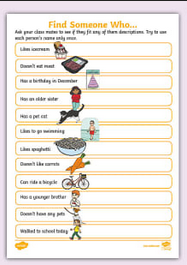
3. At a minimum, create an Introductions/Icebreaker forum to begin creating a sense of class community right from the start.

4. And add a Q&A forum for communication between students and instructors.
Discussions and News & Announcements:
Communication is Key | Clarkson's Bookstack
-
Whether taking a math, physics, physical therapy, or digital marketing class, students need to feel they are not in it alone. Get them talking, assess their contributions and provide feedback to help students learn the material. Here are various ways to communicate with students in Moodle.
Examples for discussions:
1. Muddiest Point Forum: Use the discussion forums to have students share what they are struggling with the most each week. Make participation mandatory. This creates a dialogue where students can learn from their instructor AND from each other. Provide guidance to them where needed.
2. Scenario Based Forum: Think about the topic students are learning whether it be calculus or business, where would the topic be implemented in various scenarios. Have students role play parts in the scenario and see where it leads. Provide guidance when needed or play a role yourself.
Student-to-content interaction
Many courses rely solely on the textbook and publisher lab materials which works well for some students but not all. Varying materials can add to student learning and engagement. Review the resource below to help add these interactions to the courses.
Open educational resources
Open Educational Resources - Clarkson's Bookstack
-
Open Educational Resources (OER) are freely available teaching and learning materials that can be used, adapted, and shared. These tools help faculty find, remix, and create high-quality, openly licensed course content.
Examples for finding/creating varied materials:
- Locate YouTube videos, OER resources such as MERLOT, or podcasts on the course topics (some students LOVE learning via podcast!).
- Create interactive lessons using programs available right in Moodle or integrated such as H5P with over 40 types of learning materials you (or your students) can create, interact with, and use for assessment in Moodle. A variety of materials helps keep students engaged in courses.
The TLC instructional design team would be happy to brainstorm/partner with you to increase RSI in your online course. Reach out by submitting a request to helpdesk@clarkson.edu